The Hidden Advantages of Little Residential Memory Care Communities
Business Name: BeeHive Homes of Draper
Address: 711 Pioneer Rd, Draper, UT 84020
Phone: (801) 495-3100
BeeHive Homes of Draper
Full service assisted living facility serving southern Salt Lake County offering all-inclusive Memory Care, Assisted Living, and Senior/Adult Day Care services.
711 Pioneer Rd, Draper, UT 84020
Business Hours
Families usually come to the concept of memory care during a season of stress. A loved one with dementia is roaming in the evening, missing medications, or becoming risky in the kitchen. Everyone is exhausted, fretted, and unsure whether assisted living, memory care, respite care, or generating more home aid is the best move.
What many families do not recognize in the beginning is that memory care is not one consistent design. There are big, resort-style senior care campuses with lots of residents on each flooring. There are locked dementia care units inside assisted living neighborhoods. Then there are little residential memory care homes, often accredited as residential care facilities, board-and-care homes, or care homes, with 6 to 16 citizens cohabiting in a house-like setting.
Those smaller neighborhoods can look stealthily simple from the exterior: a single-story home on a quiet street, a small sign, maybe a garden. Inside, nevertheless, the model of care can feel very various, and the benefits often only end up being clear as soon as you have seen both large and small settings side by side.
This short article makes use of years of working with households, visiting numerous neighborhoods, and enjoying citizens over time. The objective is not to claim that little is constantly better. It is to highlight the benefits that tend to be concealed up until you know what to search for, and to help you weigh them against the truths and trade-offs of each option.
What "small residential memory care" actually means
Terminology in senior care can be complicated. On paper, a small residential memory care community might be certified under the exact same umbrella as assisted living, however its structure and everyday rhythm are distinct.
Instead of a big building with long corridors, elevators, and dining-room that seat 60 individuals, a small residential home normally has:
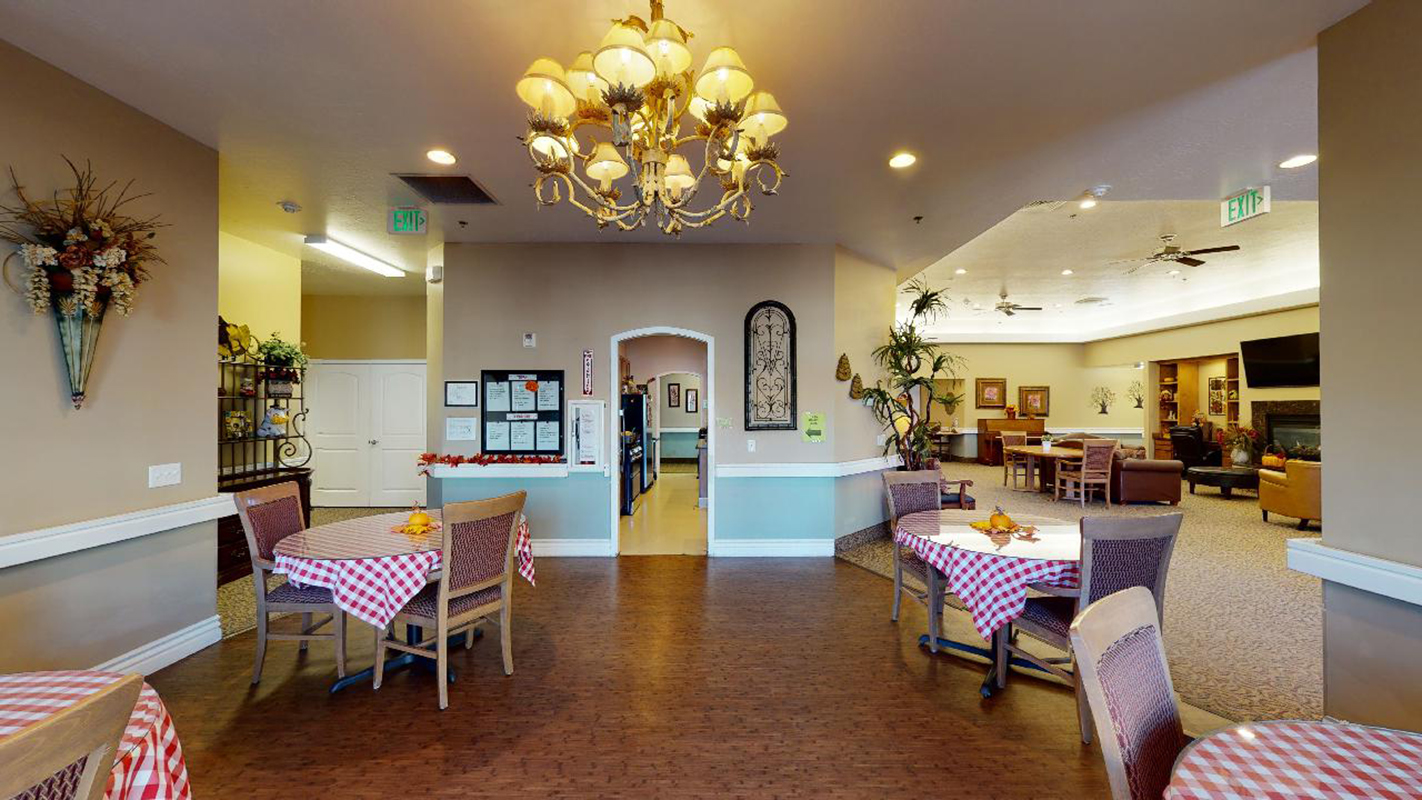
A single front door, frequently with a keypad for security, that seems like entering a personal home.
A living-room, dining area, and kitchen that look and function like a home, not an institution. Private or semi-private bedrooms, often with residents encouraged to bring their own furniture. A little backyard or patio area that staff can monitor easily.Staffing patterns reflect the smaller sized scale. Instead of a rotating cast of lots of caretakers, there might be a steady group of caregivers, a home manager, and going to nurses or therapists. The caregivers prepare, help with bathing and dressing, cue medications, and lead simple activities. The lines in between "care" and "life" blur, which can be an enormous benefit for individuals with dementia.
Small memory care homes can be stand-alone operations or part of a larger senior care company. Some specialize solely in dementia care. Others serve elders with mixed requirements, such as Parkinson's illness, stroke healing, and basic frailty, while still providing structured dementia care.
Understanding this setting assists discuss why particular benefits emerge more quickly here than in larger, more official assisted living buildings.
Emotional security and the scale of the environment
One of the most underestimated stressors for a person living with dementia is sheer environmental intricacy. High ceilings, long hallways, a consistent circulation of people, tvs shrieking, statements over a speaker system, and big group activities can overwhelm somebody who already has a hard time to process sensory input.
In small residential memory care, the environment is typically quieter and slower. Residents move in between a handful of familiar areas. The cooking area smells like soup or coffee, not like an industrial food service operation. Staff voices are easier to acknowledge. Even the sightlines are easier: from a lot of seats you can see the front door, the kitchen area, and the backyard.
For someone with moderate dementia, that smaller sized phase typically lowers anxiety. I have seen homeowners who were pacing and "attempting to go home" in a big memory care unit become calmer within a week of moving into a little residential home. They still have dementia. They still have moments of confusion. The difference is that the environment no longer bombards them with signals they can not sort.
Families sometimes stress that a smaller sized setting will feel claustrophobic. In practice, the opposite is normally real. People with cognitive impairment tend to feel more in control when they can see and comprehend their environments. Less doors, fewer choices, and less strangers can suggest more emotional safety.
Consistency of relationships
Large assisted living and memory care communities can do many things well, particularly when it comes to features, therapy offerings, or on-site medical services. Nevertheless, they struggle with one basic truth: the more staff you need to cover a 100-bed structure, the more turnover and rotation you will have.
In little residential memory care, staffing ratios and consistency are 2 of the most effective surprise advantages.

Families see it first in easy details. A caretaker in a 10-bed home understands that Mr. S likes his eggs over medium and will not touch oatmeal, that he requires a suggestion to call his child after lunch on Wednesdays, which he becomes restless if the blinds are closed too early at night. These are not items in a care strategy binder, they belong to the everyday fabric of life.
Over time, this consistency ends up being therapeutic. Dementia care depends greatly on nonverbal communication. People read intonation, facial expression, and touch. When team member recognize, homeowners unwind quicker during personal care, accept help more readily after a fall, and react better to redirection when they are upset.
Families benefit too. In a little home, it is common to see the same three or four caregivers over months or years. You learn their names, they learn your family characteristics, and trust constructs. When you contact us to ask how the night went, the individual answering normally knows since they were there. That connection is harder to accomplish in a big facility where day, night, night, and weekend shifts might all have different teams.
This is not to state small homes never have turnover or staffing obstacles, particularly in a tight labor market. But when the resident-to-caregiver ratio remains lower and the team is intentionally kept little, the relationships that form can be much deeper and more stable.
Subtle customization that actually matters
Marketing materials for both big and little suppliers frequently highlight "personalized care strategies." The phrase is so common that households tune it out. What differentiates an excellent small residential memory care community is not that a care plan exists, however how deeply it affects day-to-day life.
Consider meals. In a large memory care unit, the kitchen area prepares a menu for dozens of residents. Unique diet plans are accommodated, but practical limitations exist. In a little home, personnel usually cook in the home cooking area. They might observe that three locals who grew up on farms eat better when breakfast looks like what they keep in mind from childhood: bacon, eggs, toast, coffee. Or that a resident with innovative dementia will just drink fluids if they are served in the same red mug he recognizes.
Those adaptations are tiny, yet they make the distinction between a resident reducing weight and keeping it, between chronic dehydration and stable health.
The same sort of nuance appears in everyday routines. Some people with dementia wake early and settle best if they shower before breakfast. Others are dazed in the morning and fight bathing till mid-afternoon. In a elder care beehivehomes.com house with 8 or 12 locals, caregivers can normally flex schedules without tossing a whole structure off rhythm. It is simply simpler to say, "We will do Mrs. L's shower after her preferred television program, not in the past."
Personalization also appears in what is not forced. Homeowners who dislike large-group bingo or sing-alongs typically withdraw in larger neighborhoods, where activity calendars skew toward occasions developed for 20 individuals. In a small home, engagement can be quieter and more personalized. Folding towels beside the caretaker who is doing laundry, slicing soft vegetables with a safe knife, watering the garden, or "helping" set the table can all be framed as meaningful involvement, not childish busywork.
When succeeded, this subtle tailoring honors the adult identity of the individual. That dignity is easy to promise; it is much harder to deliver without the flexibility that a little setting provides.
Reduced hospitalizations and crises
Families seldom ask about hospitalization rates on tours, however they should. Repeated healthcare facility stays can accelerate cognitive decrease, interrupt sleep and movement, and sap whatever reserves a frail senior still has.
Small residential memory care neighborhoods can not always supply on-site nursing 24/7, specifically in states where regulations differentiate them from experienced nursing facilities. Yet much of them still manage to prevent avoidable emergency clinic journeys through attention and timing.
Caregivers who see the exact same 8 to 12 homeowners every day establish a fine-grained sense of baseline. They see when Mr. T is walking a bit slower, when Mrs. G's cravings drops for the 2nd day in a row, or when a generally talkative resident becomes unusually quiet. In dementia care, those subtle shifts often indicate early infection, dehydration, discomfort, or medication side effects.
Because lines of interaction are much shorter, a caretaker can inform your house supervisor at breakfast, who calls the nurse practitioner, who squeezes in a same-day visit. A urinary tract infection gets treated at home, with oral antibiotics and increased fluids, instead of progressing to delirium, a fall, and a 2 a.m. ER visit.
This is not an assurance. Severe events still happen. There are times when a medical facility visit is absolutely appropriate. However the mix of closer observation, quicker reaction, and reasonable risk tolerance often causes fewer disruptive emergency situations compared to more institutional settings where little changes can be more difficult to spot.
The role of respite care in a little setting
Not every family is ready to devote to long-lasting placement. Some are caring for a parent in your home, juggling work and caregiving, and simply require a break. Others are unsure how their loved one will endure a move, or they wish to "evaluate" a neighborhood before signing a long-lasting agreement.
Respite care remain in little residential memory care homes can serve numerous functions at once.
Caregivers in the house get a chance to rest, take a spouse on a long-postponed trip, or recover from their own medical treatments without the consistent caution that dementia care demands. Knowing that your loved one remains in a little home, not an enormous building, can reduce the regret lots of caregivers bring when they step away.
For the person with dementia, a brief stay provides a chance to change slowly. Two weeks in a little home with the same faces, the very same kitchen area, and a predictable routine feels less like being "sent out away" and more like coping with extended household. If a long-term relocation later on ends up being necessary, the environment is currently familiar.
From a practical perspective, respite remains enable households to assess the quality of a home beyond the polished tour. Does personnel treat citizens with persistence at 7 a.m. On a Monday, not simply during the set up visit? Does the house smell like real food cooking, or air freshener covering up smells? Are homeowners engaged, or do they invest most of the day in front of a television?
Many of the most pleased families I have worked with began their relationship with a little memory care home through a respite care remain that exposed those hidden strengths.
Safety without a prison feel
Wandering and exit looking for are among the leading factors families think about devoted memory care. Big structures frequently react with layers of security: badge-locked units, coded doors, and alarms whenever somebody attempts to leave unsupervised. The safety is real, however the experience can feel clinical.
Small residential memory care homes usually have less entry and exit indicate handle. One safe front door, in some cases one side gate to a totally fenced backyard, and a number of internal doors that can be alarmed. Instead of requiring to keep an eye on 3 floors and numerous elevators, personnel can keep visual and auditory awareness of a compact space.
This permits a security posture that feels more like living in a supervised home than in a locked ward. Locals who tend to roam can walk laps in between the living room and kitchen, or around the yard, while staff keep casual watch. Doors can stay closed however not looming, and security hardware can be low profile.
There are always compromises. In an extremely little home, if 2 residents need one-to-one attention at the exact same time, the group might need to prioritize or employ backup, which is not always right away offered. That is why it is important to ask how the home deals with citizens with very high wandering or behavioral needs, and what takes place if your loved one's danger profile changes.
Still, for lots of households, the mix of security and homelike ambiance is among the greatest arguments for a little residential model.
How little homes handle medical complexity
A typical fear is that small residential memory care can not handle complex medical requirements. The truth varies by state policies and by individual service provider, but some patterns deserve understanding.
Most little homes are developed for "assisted living level" care, not the complete medical strength of a proficient nursing facility. They manage chronic conditions such as diabetes, cardiac arrest, and COPD, administer routine medications, coordinate home health services, and provide hands-on aid with all activities of day-to-day living.
The surprise benefit is frequently in the coordination, not the raw medical horse power. When a resident needs physical therapy after a fall, the therapist concerns the home and works one on one in familiar environments. When a hospice or palliative care supplier ends up being involved, their nurses see the resident in the very same bed room they oversleep every night, with caretakers nearby who can reinforce the care plan.
Of course, there are limitations. Residents on ventilators, those needing frequent IV medications, or those with extremely unstable medical conditions normally belong in higher-acuity settings. A good small memory care supplier will be honest about these borders instead of trying to stretch beyond them.
Families need to likewise acknowledge that a smaller sized home does not necessarily mean weaker scientific oversight. A few of the very best operators use a devoted nurse who visits each home regularly, keeps an eye on weight trends, skin integrity, and medication routines, and trains caretakers in dementia-specific methods. The scale of the home can actually make this sort of proactive nursing more effective.
Social fabric and everyday life
Many big neighborhoods highlight their activity calendars: live music, getaways, physical fitness classes, religious services. These can be important, specifically for locals who still delight in larger social settings. However the quieter day-to-day social life in a little residential home frequently fits individuals with moderate to sophisticated dementia better.
Instead of events, think of rhythms. A normal day in a small memory care home might include:
- Morning coffee around the kitchen table while caregivers prep breakfast.
- Soft music or a favorite television program, with one resident assisting fold laundry and another pacing a bit, looked at gently.
- An easy group activity like chair workouts, a brief devotional, or looking through old magazines together.
- Lunch served family design at a single table, with caregivers taking a seat to help instead of backing up food carts.
- Afternoon naps, private walks in the garden, phone calls with family.
- Evening routines, one resident at a time, with unhurried support to prepare for bed.
Because the very same individuals share these regimens day after day, little bonds form. A resident with limited language may always sit next to the same neighbor at meals. Another might illuminate when a particular caregiver begins shift. These are not managed "programs," but they are no less effective for it.
Families often stress that their loved one will be "bored" in a small house without a jam-packed activity schedule. In practice, many homeowners feel less pressure to carry out and more liberty to move at their own speed. For individuals whose brains are already working overtime to analyze truth, that gentler social material can be a relief.
Who tends to prosper in a little residential memory care home
No single setting works for everyone with dementia. In my experience, the little residential model is especially well fit to a few typical profiles.
- People who become overwhelmed by sound and crowds, or who have a history of stress and anxiety, frequently cool down in a smaller, more foreseeable space.
- Individuals who matured in close-knit households or small towns and are comforted by domestic routines like cooking, gardening, and familiar family tasks tend to engage more.
- Seniors who have had unfavorable experiences in institutional environments, such as long health center stays, might accept care quicker when it feels like signing up with a home instead of going into a facility.
- People with moderate dementia who still walk separately, but who are at risk of wandering or falls at home, succeed where personnel can unobtrusively monitor them in a compact setting.
- Caregivers who stay deeply included and visit often might find a little home provides more significant methods to get involved, from sharing meals to embellishing a bedroom.
On the other hand, someone who is extremely extroverted, who still delights in large-group video games, concerts, or campus-style environments, might choose a bigger memory care community with robust programs. Likewise, a person with extremely complicated medical needs might need the higher level of on-site nursing found in a proficient nursing facility.
Matching personality, disease phase, family participation, and medical complexity to the best environment is more crucial than any single feature.
Questions to ask when visiting a little memory care home
When you visit a little residential community, the conversation matters as much as the décor. A few targeted questions can reveal how the home actually operates.
- How many caretakers are on responsibility during the day, evening, and night, and what is the optimal number of citizens when fully inhabited?
- Can you stroll me through a common day for somebody at my loved one's stage of dementia, consisting of how you handle personal care and activities?
- How do you handle residents who wander, end up being agitated, or refuse care, and at what point would you state this setting is no longer appropriate?
- Who collaborates healthcare, how frequently does a nurse visit, and how do you handle urgent modifications in condition?
- What is your method to including families, both in visits and in care planning?
Pay attention not just to the responses, however to how personnel respond. Do they speak concretely, sharing examples, or do they depend on vague peace of minds? Do caregivers on the floor appear engaged with citizens, or are they clustered around a staffing station? Does the environment feel like a place you might think of spending a complete afternoon, not simply a 30-minute tour?

Balancing cost, area, and quality
Cost inevitably gets in the conversation. Little residential memory care can be comparable in price to larger assisted living and memory care communities, more inexpensive in some markets, and more pricey in others, specifically where single-family homes are valuable.
Because these homes are smaller sized, they also exist in less numbers. Your perfect setting might be an hour's drive away, while a larger center sits ten minutes from your house. Long-term, that distance impacts how typically you reasonably visit, how quickly you can react in an emergency situation, and how connected you feel to the care team.
When weighing these aspects, consider not only month-to-month fees however likewise hidden expenses. A somewhat lower rate at a big neighborhood that often sends locals to the health center, charges extra for lots of services, or experiences high turnover may not be a bargain gradually. Conversely, a higher sticker price at a little home that prevents hospitalizations, includes most services in the base rate, and retains staff for years may show more sustainable mentally and financially.
Ask for a comprehensive breakdown of what is included, what triggers greater levels of care and associated fees, and how typically rates have actually increased in the previous five years. Openness here is a helpful proxy for how the company runs in other domains.
Bringing all of it together for your family
Choosing a memory care setting is hardly ever about finding perfection. It has to do with finding the very best fit given your loved one's needs, your household's capacity, and the options in your area.
Small residential memory care neighborhoods should have a severe appearance because many of their strengths are not instantly obvious in a pamphlet. Emotional security created by scale, deep relationships in between citizens and caretakers, real daily personalization, lowered crises, a homelike method to safety, and a calmer social material are all easier to attain when the entire "community" fits under one roof.
At the exact same time, little is not immediately much better. Some homes are poorly run or under-resourced. Some can not handle extremely complicated habits or medical conditions. Some are just not situated where your household can reasonably stay involved.
The most reputable way to discover those concealed advantages is to see them in action. Tour more than one kind of setting: a large memory care system inside a senior living school, a standalone assisted coping with a dementia care wing, and at least one small residential home. Spend calm time there. Listen to your own body's reaction as much as your mind's analysis.
If you find yourself breathing out when you step into a cottage, watching personnel relocation calmly amongst a handful of homeowners who seem known and at ease, focus. That sense of relief is typically the first indication that you have actually discovered one of those concealed benefits that can make the next chapter of your loved one's life safer, gentler, and more human.
BeeHive Homes of Draper provides assisted living care
BeeHive Homes of Draper provides memory care services
BeeHive Homes of Draper provides respite care services
BeeHive Homes of Draper supports assistance with bathing and grooming
BeeHive Homes of Draper offers private bedrooms with private bathrooms
BeeHive Homes of Draper provides medication monitoring and documentation
BeeHive Homes of Draper serves dietitian-approved meals
BeeHive Homes of Draper provides housekeeping services
BeeHive Homes of Draper provides laundry services
BeeHive Homes of Draper offers community dining and social engagement activities
BeeHive Homes of Draper features life enrichment activities
BeeHive Homes of Draper supports personal care assistance during meals and daily routines
BeeHive Homes of Draper promotes frequent physical and mental exercise opportunities
BeeHive Homes of Draper provides a home-like residential environment
BeeHive Homes of Draper creates customized care plans as residents’ needs change
BeeHive Homes of Draper assesses individual resident care needs
BeeHive Homes of Draper accepts private pay and long-term care insurance
BeeHive Homes of Draper assists qualified veterans with Aid and Attendance benefits
BeeHive Homes of Draper encourages meaningful resident-to-staff relationships
BeeHive Homes of Draper delivers compassionate, attentive senior care focused on dignity and comfort
BeeHive Homes of Draper has a phone number of (801) 495-3100
BeeHive Homes of Draper has an address of 711 Pioneer Rd, Draper, UT 84020
BeeHive Homes of Draper has a website https://beehivehomes.com/locations/draper/
BeeHive Homes of Draper has Google Maps listing https://maps.app.goo.gl/LgtrXf95hQFVgKrY8
BeeHive Homes of Draper has Facebook page https://www.facebook.com/BeeHiveDraper/
BeeHive Homes of Draper won Top Assisted Living Homes 2025
BeeHive Homes of Draper earned Best Customer Service Award 2024
BeeHive Homes of Draper placed 1st for Utah Senior Living Communities 2025
People Also Ask about BeeHive Homes of Draper
What is BeeHive Homes of Draper Living monthly room rate?
Our monthly rates for both Assisted Living and Memory Care at BeeHive Homes of Draper are thoughtfully designed to be all-inclusive. While pricing reflects each resident’s unique care needs, families appreciate that once a rate is established, it remains stable - no hidden fees or surprise increases as care evolves. We believe in clarity, consistency, and peace of mind
Can residents stay in BeeHive Homes of Draper until the end of their life?
In many cases, yes. We are honored to support residents throughout their journey, including end-of-life care, right here in the comfort of our Draper home. There are rare occasions when medical needs exceed our licensing (such as 24-hour skilled nursing) but we’ll always guide families through any transition with care and compassion
Do we have a nurse on staff?
Yes, we do. Our Registered Nurse, Jacque Parker, R.N., works closely with local home health nurses and house-call physicians to coordinate excellent care. This collaboration allows us to meet a wide range of health needs right here at home
What are BeeHive Homes of Draper's visiting hours?
We know how important it is to stay close to loved ones. That’s why visiting hours at our Draper home are flexible and designed around what works best for the resident. You’re welcome to visit during the day... just try not to come to early and stay too late
Do You Offer Rooms for Couples?
Yes, we do! BeeHive Homes of Draper offers select suites for couples who wish to continue living together while receiving care. These shared accommodations preserve comfort and connection while ensuring both individuals get the personalized support they need. Availability is limited, so reach out to learn more
Do You Provide Senior Day Care or Respite Services?
Absolutely. Our senior day care and short-term respite care options are perfect for families who need extra help during the day or while traveling. Guests enjoy the same high-quality care, engaging activities, and home-cooked meals as our full-time residents, all in a safe, social environment. We’ll help you find a care plan that fits your schedule and your loved one’s needs.
What’s the Difference Between Assisted Living and Memory Care?
Assisted living is best for seniors who benefit from help with daily activities but still enjoy socializing and independence. Memory care is a more structured service tailored to individuals with Alzheimer’s or other cognitive conditions, with routines, guidance, and security that support safety and emotional well-being.
Where is BeeHive Homes of Draper located?
BeeHive Homes of Draper is conveniently located at 711 Pioneer Rd, Draper, UT 84020. You can easily find directions on Google Maps or call at (801) 495-3100 Monday through Sunday Open 24 hours
How can I contact BeeHive Homes of Draper?
You can contact BeeHive Homes of Draper by phone at: (801) 495-3100, visit their website at https://beehivehomes.com/locations/draper/ or connect on social media via Facebook
Conveniently located near BeeHive Homes of Draper Cinemark Draper a great movie theater with full food & drink menu. Catch a movie and enjoy some great food while you wait.